
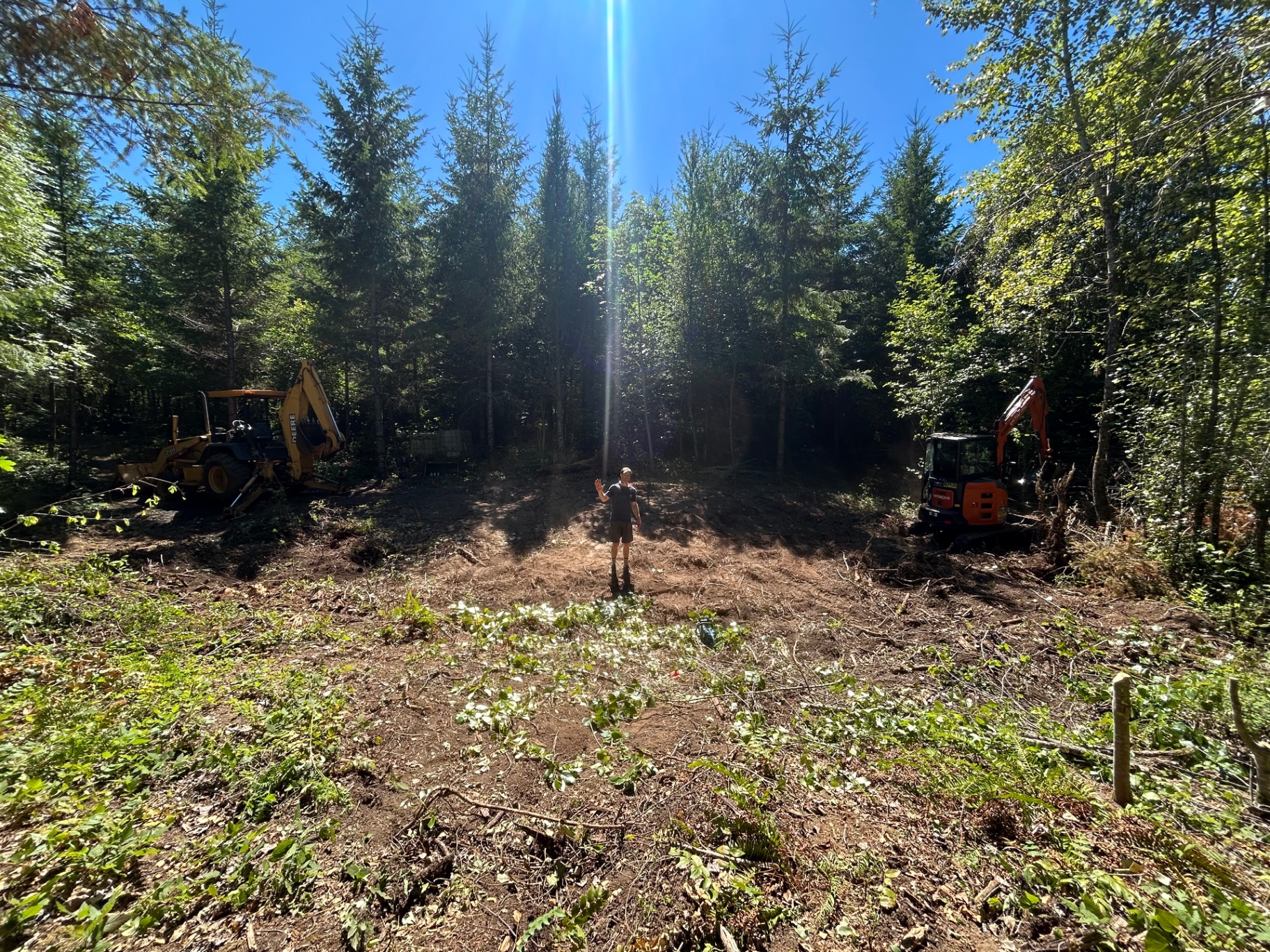
Wildfire-Resilient Landscapes
Reduce risk. Restore resilience.
Thoughtful vegetation and defensible-space work that reduces fuel while protecting soil, water, and habitat.
Vegetation, considered — not just removed
Clearing everything is easy and often makes a property worse: bare soil, more runoff, drier ground, and fast-returning brush. We look at what to thin, what to keep, and what to encourage.
Fuel continuity and structure
Where vegetation is dense and continuous, we look for practical ways to break up horizontal and vertical continuity around structures, drives, and access routes.
Moisture is part of fire resilience
Landscapes that hold water stay greener later into the season. Water retention, healthy soil, and living ground cover are part of the same conversation as fuel management.
Soil, erosion, and habitat stay in view
Work is planned so that reducing fuel doesn't trade one problem for another on slopes, along drainages, or in the places wildlife actually use.
How we work
We identify where thinning, spacing, and ongoing management will make the most difference, then sequence work so it remains manageable.
Willowflower Works does not provide certified wildfire inspections, defensible-space certification, engineering, or any guarantee of wildfire protection. Where specialized expertise, forestry licensing, or agency programs are involved, projects may include collaboration with appropriate qualified professionals.
Common questions
Fire resistant landscaping and defensible space, answered
How much defensible space do I need around my house?
Most guidance breaks defensible space into zones: the first five feet immediately against the structure, an intensively managed zone out to about 30 feet, and a reduced-fuel zone from roughly 30 to 100 feet. We plan work around those zones and around how your specific property drains, dries, and burns.
Is fire resistant mulch a good idea near the house?
Within the first five feet of a structure, gravel or stone is safer than bark or shredded wood mulch, which can carry embers. Organic mulch still has a place farther out where it helps hold soil moisture and reduce runoff.
How do I get started?
Start with a good-fit call. It is a short, no-obligation conversation about your property, your concerns, and your goals. From there we decide together whether an on-site assessment is the right next step.
Wondering where your property is most vulnerable?
An assessment looks at fire-resilience opportunities alongside water, soil, and vegetation.